
Large and catastrophic wildfires are becoming more frequent in the western US due to temperature increases, expanding wildland-urban interface, and fuel buildup. Smoke from these large wildfires threatens air quality, health, the environment, and the economy.
When smoke from wildfires threatens Idaho, DEQ implements the Wildfire Smoke Event Response Protocol, which allows for interagency coordination with the following organizations:
Idaho Agencies
- Department of Health and Welfare
- Public Health Districts
- State Emergency Medical Services Communications Center
- Emergency Fire Dispatch
Federal Agencies
- Bureau of Land Management
- National Park Services
- National Weather Service
- US Environmental Protection Agency
- US Forest Service
Tribal Agencies
- Coeur d’Alene Tribe
- Kootenai Tribe of Idaho
- Shoshone-Bannock Tribes
- Shoshone-Paiute Tribes
- Nez Perce Tribe
Other State Agencies
- Montana Department of Environmental Quality
- Washington Department of Ecology
- Oregon Department of Environmental Quality
Wildfire Smoke Information
DEQ provides a smoke forecast when wildfire smoke impacts Idaho. This forecast includes possible smoke impacts, air quality advisories, and issued burn bans.
DEQ coordinates with county, state, tribal, and federal agencies to provide wildfire smoke information on the Idaho Smoke Blog.
- See DEQ’s open burning map for air quality-related burning restrictions by county.
- Find current air quality information in your area.
- Find information about fires in your area at InciWeb – Incident Information System.
Annually, DEQ summarizes Idaho’s most recent wildfire season and compares it with past wildfire seasons. Information on emissions from wildfires, air quality during the wildfire season, historical data on past wildfire seasons, and what outreach DEQ conducted during the season is available in the 2023: Idaho’s Year in Wildfire review. The summary of wildfire emissions for the 2023 wildfire season is in the Idaho Wildfire Emissions Estimates report.
Previous Wildfire Reviews
Protect Yourself from Wildfire Smoke
The best time to prepare for wildfire smoke is before the wildfire season. Take action to protect yourself and reduce your smoke exposure:
- Sign up for air quality advisories and use the links at the bottom of this page to follow us on social media.
- Monitor wildfire activity in your area.
- Identify a room to use as a clean room to reduce your exposure to wildfire smoke while indoors.
- Ensure your indoor air purifier does not produce ozone.
- Review the Idaho Department of Health and Welfare’s community guide for staying healthy during wildfire smoke events
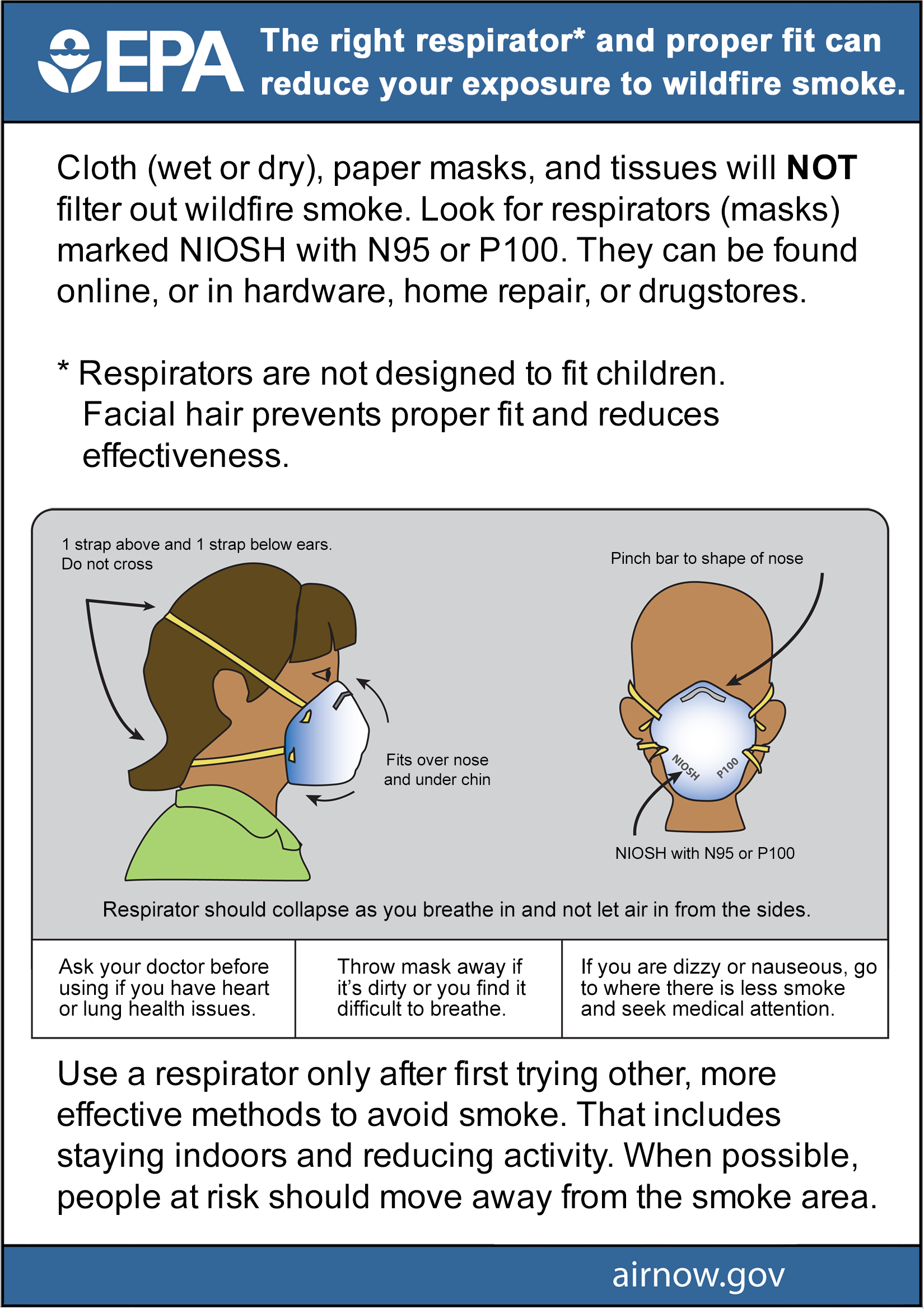
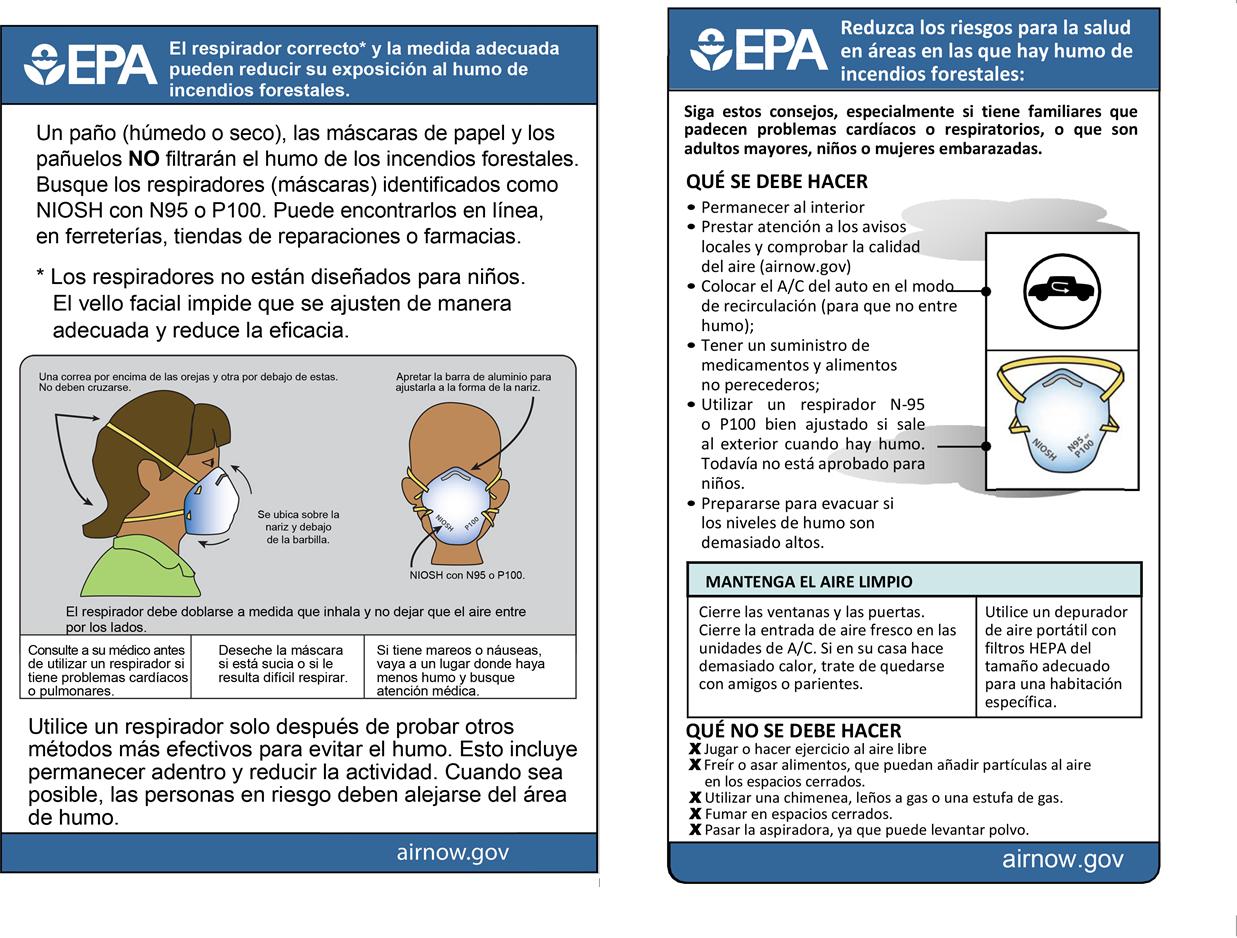
- Review the AirNow respirator fact sheet (versión en Español .)
- Review AirNow tips to reduce health risks in areas with wildfire smoke (versión en Español .)
For general health questions about wildfire smoke, contact the Idaho Division of Public Health’s Environmental Health Program Manager at (800) 445-8647, or visit the Idaho Department of Health and Welfare Wildfire Smoke page.
Information for Health Professionals
In 2019, an interagency team, consisting of the California Air Resources Board, California Office of Environmental Health Hazard Assessment, US Centers for Disease Control and Prevention, US Forest Service, and US Environmental Protection Agency updated the Wildfire Smoke: A Guide for Public Health Officials. This guide helps state, tribal, and local public health officials prepare for smoke events and take measures to protect the public during wildfire events.
EPA developed a Smoke-Ready Toolbox for Wildfires to help public health professionals educate the public about the risk of smoke exposure and actions to take that protect public health.
EPA also developed an online Wildfire Smoke and Your Patients’ Health course for physicians, registered nurses, asthma educators, and clinical or health education officials. Learn more about online training for health professionals.